Summary: Corporate sustainability reporting is more than a compliance exercise. It’s a way for companies to demonstrate accountability, build trust, and create long-term value. This guide explains why sustainability reporting matters, how to prioritize stakeholder concerns, and the role of technology and partners in delivering accurate ESG data.
- Corporate sustainability reporting tracks the ESG factors stakeholders care most about.
- Accurate reporting builds trust and offers reputational benefits while meeting regulatory trends.
- Stakeholder engagement through surveys helps identify and prioritize relevant data.
- Technology and managed recycling partners provide reliable ESG data and efficient reporting.
- Common frameworks include ISSB, GRI, and SASB, offering global and industry-specific standards.
Corporate sustainability reporting is increasingly a requirement for large businesses, due to the priorities and demands of stakeholders as well as state laws and international standards. Historically, however, there have been reporting blind spots in some areas, like waste, for example, due to a lack of data and transparency.
However, it’s important to look at sustainability reporting as more than just an obligation. The right approach can build trust, demonstrate accountability, and drive value in the long term. And that right approach rests on tracking and reporting the data and details that matter most to stakeholders. And with modern approaches to data collection, and with managed systems, it’s possible to overcome those data gaps, and to ensure accurate and thorough reporting.
How can your organization meet and exceed the expectations of stakeholders and deliver insightful, relevant, and accurate data and context? Fully managed recycling services that include focused data collection and corporate sustainability reporting play a key role.
Keep reading to learn more, as well as find answers to FAQs about corporate sustainability reporting.

Corporate Sustainability Reporting & Tracking What Matters
Why Corporate Sustainability Reporting Matters
Growing demand from investors, customers, regulators, and other stakeholders is a continuing trend in sustainability reporting and the broader Triple Bottom Line concept. Accurate reporting provides a clear sense of accountability and has reputational benefits as stakeholders increasingly focus on ESG metrics.
The Governance & Accountability Institute finds multi-year growth in Environmental, Social, and Governance (ESG) reporting among mid-cap and large-cap public companies in the US. These companies take that growing demand seriously and prioritize in-depth reporting.
Identifying and Prioritizing Stakeholder Concerns
Big-picture ESG data and sustainability reporting cover common topics like carbon emissions, energy and water consumption, waste generation, and other factors with environmental impact, as well as key social and governance data.
Your specific stakeholders are likely interested in this data, but may have more specific or unique concerns as well. Assessing their interests can help determine which data points to include and tailor reporting beyond standard expectations and disclosure requirements.
Surveys of customers, shareholders, and others can be the path to more relevant reporting that engages stakeholders. Sustainability consulting firm Ramboll offers more in-depth guidance on engaging these groups.
Technology’s Role in Reliable ESG Information and Reporting
Technology is a foundational asset in ESG reporting, from capturing raw data accurately to generating and distributing information to stakeholders.
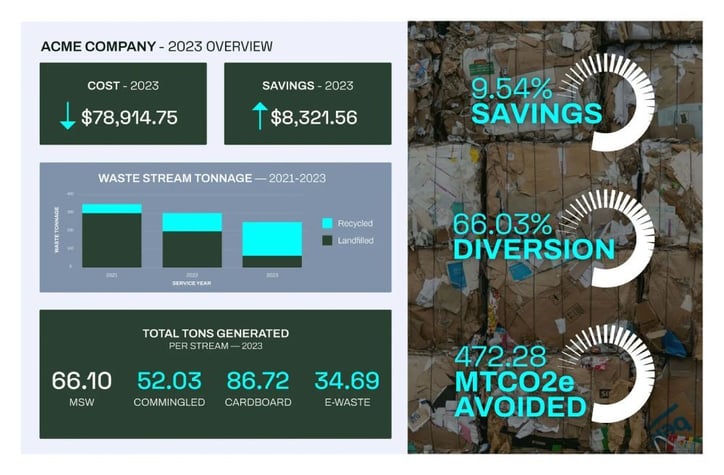
A fully managed, tech-enabled waste and recycling partner can play a key role in this regard. By using tech to drive more efficient recycling as well as capturing key sustainability data and sharing it with your organization, as our RecycleMore™ program offers, the right partner can help your company demonstrate its progress with specific and measurable metrics
FAQs & Answers About Corporate Sustainability Reporting
Is ESG Reporting Mandatory in the USA?
ESG reporting is not mandatory in the US on the federal level. However, a variety of bills and current laws, such as California’s Climate Accountability Package, are increasingly requiring detailed ESG reporting. Also, large US companies that do significant business in the EU have to follow the requirements laid out in the Corporate Sustainability Reporting Directive.
What Should Be Included in a Sustainability Report?
For comprehensive coverage of the topic, a full sustainability report should include environmental performance data along with social responsibility reporting and details about governance practices. Details are crucial for sustainability reporting metrics – measurable data is at the core of effective reporting.
What Are ESG Reporting Standards?
Common ESG reporting standards include:
- International Sustainability Standards Board (ISSB) IFRS Sustainability Disclosure Standards, which are investor-focused and designed to be used globally for consistent and comparable reporting.
- Global Reporting Initiative (GRI) Sustainability Reporting Framework (SRF), another set of universal standards that include topic standards and business sector-specific standards to drive clearer and more comparable reporting.
- SASB Standards, which are industry-specific across 77 defined industries and primarily focused on sharing data with investors and providers of financial capital.
Are ESG Metrics Reported to Stakeholders?
One of the foundational intents of ESG reporting is to share key metrics, details, and information with stakeholders. Not all ESG metrics may be reported to stakeholders, and there are only a few state-level laws that currently mandate this reporting. That said, providing ESG information to stakeholders is still a crucial part of the process.
Can A Waste and Recycling Partner Help with Corporate Sustainability Reporting?
Yes! Tech-enhanced, fully managed waste and recycling service providers like RoadRunner can provide accurate and relevant reporting data to their clients. Along with streamlining waste management and recycling processes, the right partner can deliver accurate and timely sustainability data and reporting to support reporting efforts and requirements.
