Skip to content
Interior of a restaurant
Our experts know your business

Restaurant Waste Management Services

Restaurant waste management has to work around busy kitchens, limited back-of-house space, changing food volume, and customer-facing standards.

RoadRunner helps restaurants manage waste and recycling with service plans built around real operating needs, from restaurant waste collection to food waste diversion and recycling support.

RoadRunner will provide support across all of your locations with fully-managed services that drive streamlined operations, more recycling, and cost savings.

WASTE MANAGEMENT FOR RESTAURANTS AND FOOD SERVICE OPERATIONS


In restaurants, waste does not wait for a slow moment. Food scraps, packaging, cardboard, bottles, and landfill waste move through the back of house all day. It often happens in tight, busy spaces where any overflow can quickly cause problems for your team.

RoadRunner helps restaurants build waste and recycling programs that keep their daily service moving. Our team will look at where waste is generated and when containers fill, so your program matches the way the kitchen really operates.

With those insights, we’ll know which streams could be handled more efficiently and help make that possible.

Support may include:

  • Adjusting pickup frequency around peak volume
  • Coordinating restaurant waste collection and removal
  • Identifying food waste diversion opportunities where available
  • Improving recycling for cardboard, packaging, glass, and containers
  • Matching equipment to kitchen, corral, or loading-area constraints
  • Bringing clearer reporting and vendor oversight to one location or many

Let our team help you develop a more manageable waste process that helps your teams stay focused on service.


OUR CUSTOMERS APPROVE

4.5 out of 5 stars
  • Chick-fil-A logo
  • Dark Matter Coffee logo
  • Dunkin' logo
  • McDonald's logo
  • Popeye's logo

RESTAURANT WASTE MANAGEMENT CHALLENGES WE HELP SOLVE

90% of businesses overpay for waste, and most struggle with issues of unreliable service and illegal dumping, but our experts know the restaurant industry has its own unique challenges. Here are just a few.

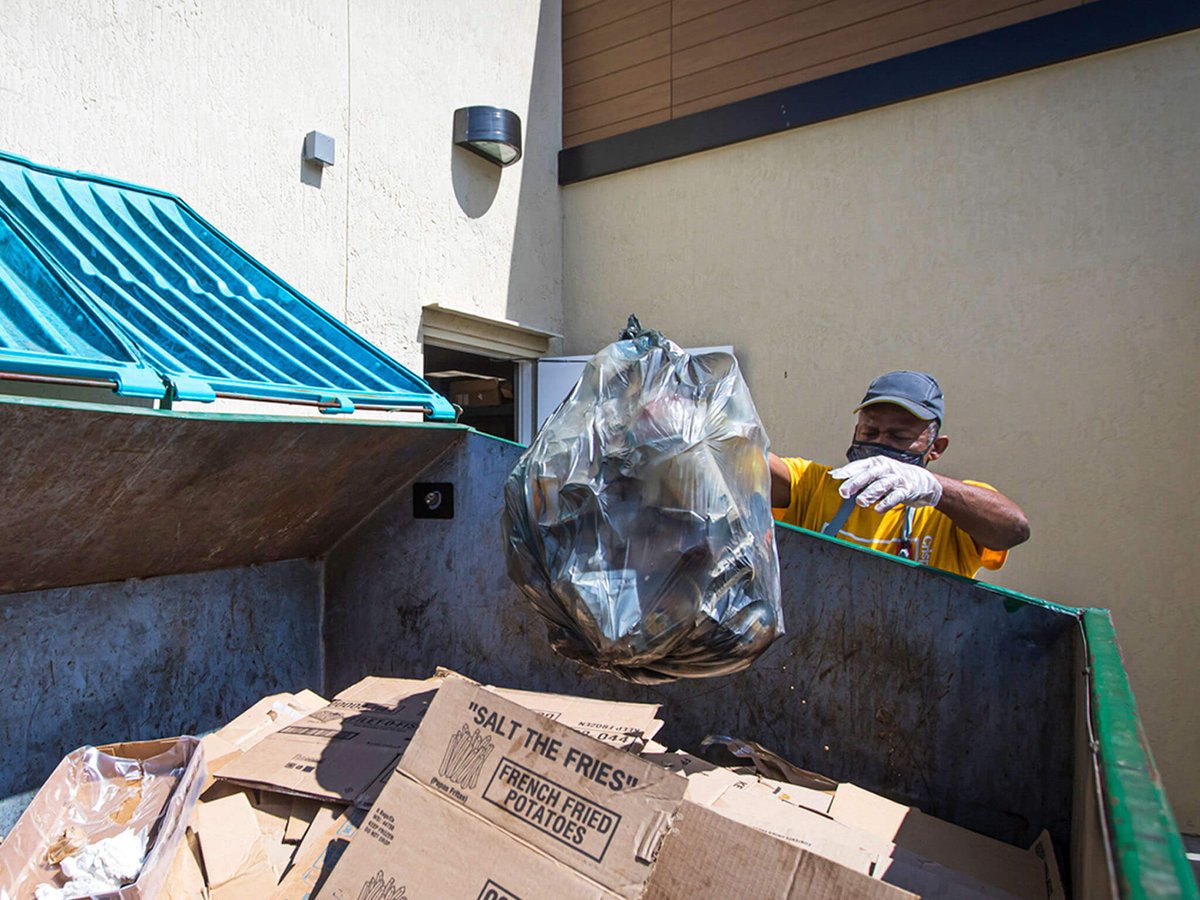
Restaurant employee throwing trash into a dumpster

BACK-OF-HOUSE TRAINING FOR PROPER WASTE AND RECYCLING

With back-of-house staff turnover, education and awareness of proper waste and recycling management can be difficult and an ongoing challenge. Centralized training tools, like posters and signs (in multiple languages), along with training around simplified operations, can be effective tools in reinforcing proper disposal practices so team members across your business can always recycle right.

SPACE CONSTRAINTS IN KITCHENS, CORRALS, AND LOADING AREAS

Implementing data-informed waste solutions is pivotal when dealing with space constraints in kitchens, corrals, and loading docks. Knowing how much and what type of waste you produce helps determine the size bins you need and how often you need service to make sure you’re maximizing the utilization of your space without risking overflowing dumpsters. Waste MeteringTM technology can help.

FOOD WASTE DIVERSION AND ODOR CONTROL

There is an endless supply of pre and post-consumer food waste from your kitchens, and the wrong food waste diversion program leads to bad odors and can attract pests, posing health and safety risks with the potential to impact your reputation, cause fines and even shut down operations. Improper disposal of food waste in landfills contributes to greenhouse gas emissions, too. RoadRunner has a long track record of implementing food waste diversion programs that work.

DELIVERING VALUE FOR RESTAURANT WASTE PROGRAMS

GUARANTEED COST SAVINGS

RELIABLE CUSTOMER SERVICE

BETTER 
HAULER OVERSIGHT

Increased Landfill Diversion

Accurate ESG Reporting

LEARN MORE ABOUT HOW WE OPERATE AND HOW WE BRING VALUE TO YOU

RESTAURANT WASTE MANAGEMENT FAQS

What are the most effective waste solutions for restaurants?

The most effective waste solutions for restaurants are built around daily volume, available space, service timing, and the types of material each location generates. Most restaurants need reliable landfill waste service, recycling for packaging and cardboard, and clear back-of-house processes that staff can follow during busy shifts.

RoadRunner helps restaurants assess what is moving through each location before recommending a service plan. That may include restaurant waste collection, recycling support, food waste diversion where available, right-sized containers, vendor coordination, and reporting that gives teams better visibility into performance.

How can restaurants reduce food waste and disposal costs?

Restaurants can reduce food waste and disposal costs by tracking what is being thrown away, separating materials properly, and identifying where food is being lost during prep, storage, service, or post-consumer collection. Better sorting can also help keep recyclable materials and organics out of landfill waste when local programs are available.

RoadRunner helps businesses evaluate restaurant food waste management needs alongside the rest of the waste program. With the right service setup, restaurants can reduce overflow, limit unnecessary pickups, improve diversion, and identify practical restaurant food waste solutions that fit daily operations.

What recycling and composting options are available for restaurants?

Restaurant recycling and composting options may include cardboard recycling, mixed recycling, plastic film, glass, metal containers, and organics collection where available. The right options depend on local recycling markets, service availability, contamination risk, and how much space the restaurant has for separating materials.

A strong program should be easy for staff to follow. RoadRunner can help restaurants evaluate waste streams, improve bin placement, provide education materials, and build recycling or composting processes around how the location actually operates.

How often should restaurants schedule waste pickups?

Restaurants should schedule waste pickups based on food volume, customer traffic, storage space, odor risk, and how quickly containers fill. A quick-service restaurant, full-service restaurant, and multi-unit food service operation may each need a different restaurant waste collection schedule.

RoadRunner helps match pickup frequency to actual operating needs. This can help prevent overflow, reduce odor and pest issues, avoid unnecessary service, and keep restaurant waste disposal from disrupting daily operations.

What regulations apply to restaurant waste disposal?

Restaurant waste disposal regulations can vary by city, state, waste stream, and business type. Some locations may have rules for organics diversion, recycling, grease handling, hazardous materials, or how waste must be stored and collected.

Restaurants should confirm local requirements before changing their waste program. RoadRunner can help teams better understand their waste streams, coordinate services by location, and support disposal processes that align with site-level needs and applicable local requirements.

What are the benefits of outsourcing restaurant waste removal?

Outsourcing restaurant waste removal can help restaurants reduce vendor complexity, improve service oversight, and spend less time managing daily waste issues. It can also help identify service gaps, missed recycling opportunities, and unnecessary costs.

RoadRunner provides managed support for restaurant waste removal, recycling, collection, reporting, and vendor coordination. That gives restaurant teams a clearer process for keeping back-of-house areas cleaner, supporting staff participation, and improving waste program performance.

READY TO GET STARTED?

Let's get the conversation started on how to drive recycling and cost savings for your business.

×