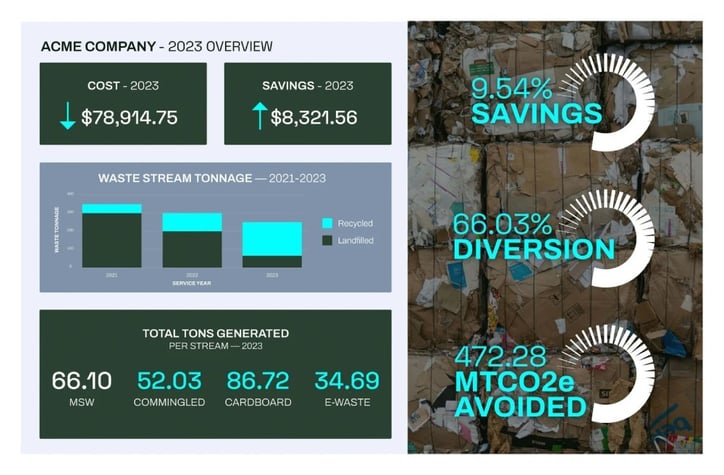
Summary:
This blog explains why waste reporting is one of the most underdeveloped areas of ESG reporting—and how new technology, especially AI-powered platforms, is helping enterprises fix data gaps, standardize metrics, and improve diversion performance at scale. Readers will learn how modern tools resolve the challenges of fragmented data, manual processes, and inconsistent reporting across multi-site operations.
Key takeaways:
- Why decentralized systems create inaccurate and incomplete waste reporting data for ESG disclosures.
- How modern waste metering technology enables automated data collection and robust reporting.
- Ways AI improves accuracy through automated detection, real-time monitoring, contamination tracking, and predictive insights.
- The impact of AI adoption on overall ESG performance, supported by peer-reviewed research.
- Practical steps enterprises can take to improve waste reporting and meet stakeholder expectations.
Enterprise organizations face increasing pressure from their key stakeholders, including regulators, investors, and customers, to deliver accurate and auditable environmental, social, and governance (ESG) metrics and reports grounded in real operational data.
However, waste reporting remains an inconsistent and undermeasured component of ESG reporting for large, multi-site businesses.
Modern ESG reporting technology – such as AI in ESG reporting through proprietary technology offered by tech-enhanced waste management and reporting partners, and more – can give large organizations the ability to automate data capture, unify and standardize reporting across locations, and improve landfill diversion performance at scale.
Keep reading to learn more about how generative AI intelligent ESG tracking & reporting is improving efforts in this space, and how enterprises can adopt these tools to accelerate progress toward zero waste and broader sustainability goals.
How Technology Is Transforming Waste Reporting for Enterprise ESG
The Problem: Fragmented, Inaccurate, and Manually Collected Waste Data
Enterprises, especially multi-site businesses, often use a decentralized approach to waste collection. This lack of standardized workflows frequently leads to inconsistent data collection, preventing accurate and comprehensive ESG waste reporting.
Other issues contribute to this big-picture problem, including manually issued or digitally siloed hauler invoices and spreadsheets for tracking related data. Additionally, many enterprises lack visibility into real diversion levels and contamination levels.
The Evolution of ESG Reporting Technology
Traditional systems, including ERP software, spreadsheets, and hauler portals, can fall short for waste reporting. These tools weren’t built for comprehensive, enterprise-level ESG waste reporting. They can track basic metrics, but often can’t deliver the granularity, consistency, or real-time accuracy that large organizations need.
Modern ESG reporting technology uses advanced tools and systems like connected sensors, automation, and centralized platforms to overcome these persistent issues.
This shift toward digitized, automated ESG platforms has improved insight, data completeness, consistency across locations, and overall accuracy. With standardized datasets, trend and performance tracking, a centralized and single source of truth, and other benefits, enterprises can substantially improve the results of their reporting.
How AI Elevates Waste Reporting and ESG Performance
AI-powered camera sensor technology and centralized dashboards drive intelligent ESG tracking and reporting by:
- Automating time-consuming, manual tasks, as Thomson Reuters points out.
- Accurately detecting and tracking key metrics related to recycling contamination, diversion volume, overall waste and recycling volume, and more.
- Harmonizing data across multiple worksites.
- Using data-driven predictions related to future waste output, diversion rates, and more.
The end result is increased consistency, enhanced visibility, and more complete data that lead to meeting stakeholder demands in ESG waste reporting and moving forward on the road to zero waste and more specific sustainability goals.
A peer-reviewed study published in the International Review of Economics & Finance reached the following conclusion: “Our primary finding robustly confirms that increased AI adoption significantly improves a firm's overall ESG performance.”
FAQs: Technology, AI, and the Future of ESG Reporting
What is the role of technology in ESG reporting?
Technology can play a crucial role in ESG waste reporting by standardizing data collection, automating manual processes, and providing real-time visibility into performance across locations for enterprise businesses. Advanced ESG reporting technology centralizes diverse streams of information, creating a more reliable and auditable foundation for ESG disclosures.
What is the ESG framework for waste management?
The waste management component of ESG typically includes environmental metrics such as landfill diversion rate, total waste generated, recycling rates, and emissions from waste. Accurate waste reporting is essential to support these disclosures.
What is currently the most widely used ESG reporting framework?
The Global Reporting Initiative (GRI) remains the most widely used ESG reporting framework across the globe. However, enterprises use a variety of frameworks, including SASB, CDP, TCFD, and CSRD, depending on their industry, geographic location, and stakeholder expectations.
How to improve ESG reporting?
Improving ESG reporting depends on the specific needs of an individual organization. However, common and effective approaches include standardizing data inputs, leveraging automation to reduce errors and time spent on manual tasks, adopting centralized technology platforms, and partnering with vendors that provide accurate metrics, such as waste and diversion data. Integrating AI-driven tech can help enterprises accomplish these objectives.
What is the role of AI in ESG reporting?
AI can automate data collection, identify potential issues, predict performance trends, track key waste and recycling metrics, and much more. AI tools in ESG reporting range from generative AI platforms to AI-equipped cameras to identify waste levels, diversion rates, and other foundational metrics related to waste reporting.
Leveraging AI for Enhanced ESG Waste Reporting
RoadRunner offers a comprehensive solution for enhancing ESG reporting. Learn more about how we can change your company’s ESG waste reporting for the better.
