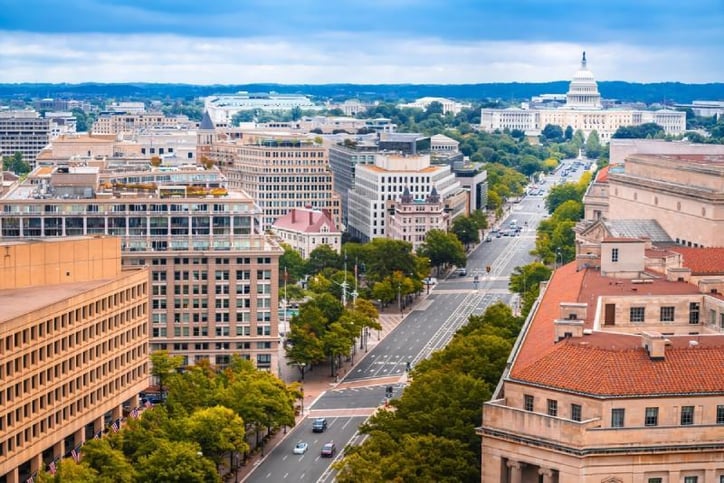
Sustainable waste management is essential for DC commercial buildings as the city works toward its 80% landfill diversion by 2040 goal. This guide explains the regulations, strategies for compliance, and how managed partnerships can simplify the process.
- DC’s Zero Waste plan requires compliance, not just voluntary efforts.
- The plan is based on seven goals, including waste reduction, recycling, composting, and building a circular economy.
- Core strategies for commercial buildings include waste stream audits, recycling optimization, organics diversion, and tenant education.
- Partnering with data-driven service providers supports auditing, ESG reporting, and compliance with Zero Waste DC.
- Fully managed solutions help reduce costs while meeting sustainability goals.
Washington, DC, has some ambitious zero-waste goals that affect commercial buildings, among many other businesses, in the district.
While individuals and small businesses face their own challenges adjusting to the city’s goal of 80% landfill diversion by 2040, for commercial buildings and larger businesses, this objective can be especially complex. From high waste volumes to diverse waste streams, there are many factors to account for.
Keep reading to learn more about DC’s Zero-Waste Plan as well as sustainable urban waste management strategies that can enhance compliance for commercial buildings in the capital.
Sustainability in Washington, DC: Key Info
The Sustainable Solid Waste Management Amendment Act of 2014 and the follow-up Zero Waste Omnibus Amendment Act of 2020, often called Zero Waste DC, set ambitious goals for sustainable waste disposal and diversion in the nation’s capital.
These acts are laws, and not just suggestions for sustainable waste management practices. Compliance is key. Businesses, including commercial buildings, have to understand the rules that affect their operations and make adjustments that ensure compliance.
The practical objective of these acts, which apply to both the district’s municipal government and private waste collectors that operate in DC, is a relatively simple concept. Specifically, the acts aim to divert 80% of waste from landfills and waste-to-energy facilities by 2040.
There are seven specific goals and 43 distinct actions that the acts support as well. These seven goals are based on the established Zero Waste Hierarchy. They include the following waste management strategies for sustainable development:
- Reducing per-capita waste generation
- Incentivizing material and product re-use and disincentivize single-use materials and products
- Increasing access to and participation in recycling and composting efforts
- Establishing resilient zero-waste operations and infrastructure for the municipal government
- Developing a local circular economy to encourage the reuse of byproducts traditionally considered to be waste and scrap
- Supporting both education and enforcement related to these new waste collection standards
- Protecting the environment in DC
The impact of these regulations can vary across industries and individual companies. Commercial buildings and their tenant businesses need to prioritize relevant regulations and compliance obligations. In many cases, a partnership with a data-driven provider of fully managed waste services can help to:
- Support adherence with Zero Waste DC goals
- Reduce the cost of waste management
- Complete auditing and reporting, including ESG reporting, to provide insight and demonstrate compliance
- Provide consistent support and continued monitoring across multiple locations
Core Strategies for Sustainable Waste Management
Waste and sustainable materials strategy becomes even more important when local laws require substantial landfill diversion and other operational changes. Options for businesses, including but not limited to commercial buildings, to support compliance include the following.
Waste Stream Assessment & Data Tracking
Conducting audits to identify waste types and volumes helps businesses better understand the gap between current operations and compliance, highlighting both challenges and opportunities.
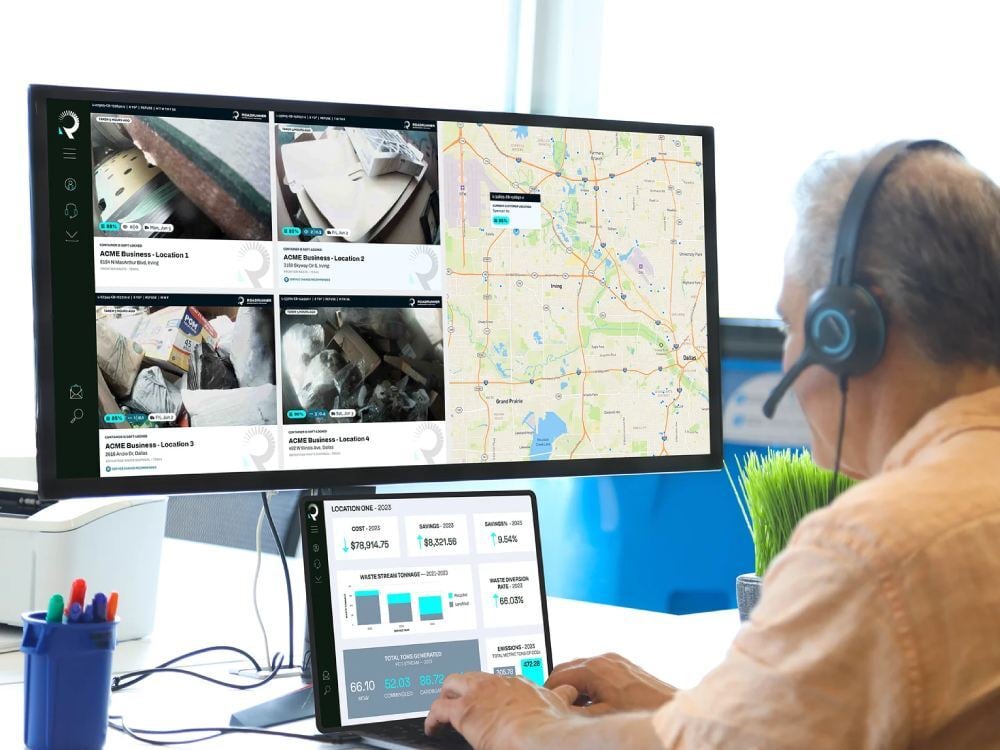
Technology and reporting can be implemented in-house or achieved by using the existing infrastructure offered by the right waste management partner.
Recycling Optimization
Effective bin placement to reduce contamination, clear signage, and educational efforts can all help to support a more efficient recycling program. So can a focus on high-volume materials generated by commercial tenants, targeting the highest output to increase recycling and decrease landfill-bound waste.
Organics Diversion
While not all tenants produce significant organic waste, composting and similar efforts can support compliance when commercial tenants create this waste stream. On-site solutions and off-site providers of organic waste processing and diversion can both play important roles.
General Education and Engagement
When commercial building owners and managers provide waste management services to tenants, they need to prioritize education and engagement. Going beyond the minimum can clarify regulatory needs and expectations in terms of waste handling. Make best practices clear and set firm requirements for aligning with DC’s sustainable waste management rules.
Service Provider Partnerships
Not all waste management partners are equal in terms of the scope of service they provide, nor in the extent of their auditing, reporting, and support efforts. Finding a partner that can leverage their knowledge, experience, technology, and industry relationships can smooth the path toward compliance with relevant Zero Waste DC goals.
A True Partner in Waste Management
RoadRunner delivers a fully-managed approach to waste management for commercial buildings in Washington, DC. From waste audits that reduce the cost of hauling to technology-backed accurate reporting that support alignment with Zero Waste DC goals, we go further to support your needs.
our tech-enhanced, fully managed strategy better positions your business to not only comply with relevant regulations, but to better manage waste and save money while doing so.
Learn more about our commercial trash service in Washington, DC!
