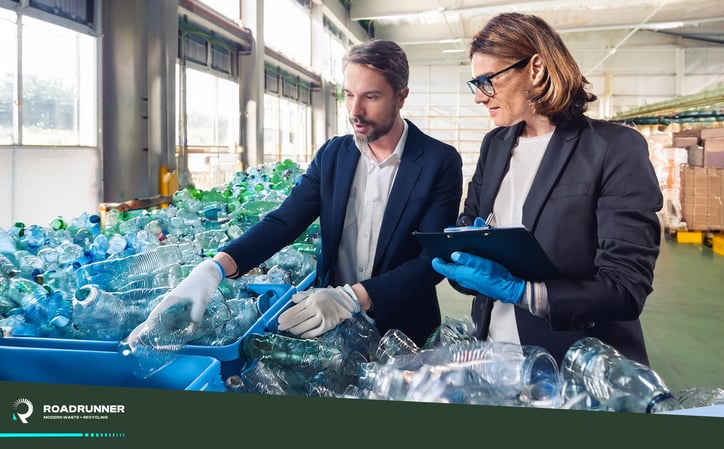
A waste audit helps businesses understand what they throw away, how materials move through their facilities, and where waste and recycling programs can improve. The blog explains when to conduct a waste audit, how the process works, and how audit results can guide smarter service decisions.
- A waste audit reviews landfill waste, recycling, and other material streams to identify volume, contamination, diversion opportunities, and service gaps.
- Businesses may need a waste audit when costs rise, containers overflow, recycling participation is low, or sustainability targets are missed.
- The audit process includes forming a cross-functional team, setting objectives, choosing a typical operating window, gathering tools, sorting waste, and sharing results.
- Waste audit findings can help right-size containers, adjust pickup frequency, improve signage, separate high-volume materials, and support ESG or Zero Waste goals.
- RoadRunner helps businesses turn audit findings into practical waste and recycling improvements across one location or many.
A waste audit is a structured review of the materials a business throws away, recycles, or diverts from landfill, and it can uncover a lot about a company. You’ll learn about a company’s environmental impact, where waste actually goes, and how much it’s paying for these operational costs.
In return, a business that goes through the waste audit process could take steps to keep costs in check, get insights into employee behavior, and improve diversion goals. However, it can be a large undertaking, so it’s important to use the right approach.
In this guide, we’ll cover how waste audits work and how businesses can use audit findings to improve waste operations.
What Is a Waste Audit?
A waste audit is the process of collecting, examining, and analyzing a business’s waste streams. A waste audit may be referred to as a “waste stream audit” when the review focuses specifically on the different material streams moving through a business.
Regardless of the focus, a designated team is assembled to collect and store waste and recycling over the course of about a week. After this time, the team determines the types of waste and associated volumes a business generates.
Using collected findings, a business can determine next steps, such as reducing volumes or implementing processes for more efficient waste removal and reduction. For larger businesses with multiple locations, this can be a vast undertaking requiring cooperation from a number of different teams and departments.
When Should a Business Conduct a Waste Audit?
A business should conduct a waste audit when its waste program no longer feels aligned with day-to-day operations.
Signals that it may be time to take a closer look include:
- Rising service costs. Costs may increase when pickup frequency, container size, or service levels no longer match the amount of waste a business actually generates.
- Overflowing containers. Overflow can signal that the current container setup is too small, pickups are too infrequent, or materials are not being sorted into the right streams.
- Low recycling participation. Low participation may point to unclear signage, inconvenient bin placement, limited employee awareness, or a recycling program that does not fit daily workflows.
- Contamination issues. Contamination happens when materials are placed in the wrong stream, which can reduce recycling effectiveness and create extra handling challenges.
- Missed sustainability targets. If diversion, recycling, or waste reduction goals are falling short, a waste audit can help identify where materials are being lost or mismanaged.
A waste audit is also useful before making operational changes, creating a baseline before those changes affect your waste stream.
Many businesses benefit from conducting waste audits on a recurring schedule. A semi-annual or annual review can help confirm whether your system still matches actual waste patterns.
Why Businesses Conduct Waste Audits
With so much that can be uncovered following this process, why are waste audits performed in the first place? Some of the primary benefits include the following:
Helps Keep Costs In Check
Conducting a waste audit can uncover areas in which you can make changes to your existing waste management program. Right-sizing your program and equipment means everything fits the needs of your company as best as possible. You’re not paying for space you don’t need or paying for unnecessary pickups. Finding new areas where your business can divert waste from landfills and finding buyers for the material can also offset some of the costs in many cases.
The continued impact of inflation is also affecting the waste industry. Taking a proactive approach to your waste program can help keep some of those costs in check.
Enhances the Effectiveness of Your Program
Audits can expose whether materials are being placed in the wrong containers, if there are opportunities to develop new recycling streams or if materials can be removed from the waste stream completely. Based on your findings, you may see the need to develop a plan to capture more recyclables and reduce any excess waste. For example, if an audit reveals large amounts of disposable coffee cups are being thrown away, you may want to provide reusable coffee mugs to employees or recyclable cups to customers.
Shows How Well Your Waste Management Program Works
Once your business completes a waste audit, you’ll have a better understanding of how your waste management program is working overall. While the team will look for waste generation patterns and practices, it can be an arduous process to undertake without the help of professionals in waste management. That’s why it’s a good decision to work with a knowledgeable waste expert who uses monitoring technology to uncover data-driven insights and next steps.
Encourages Employees to Be Involved In Improving Waste and Recycling
Having data from a waste audit in hand is a great way to communicate waste and recycling goals to employees. Reporting on waste reduction efforts to employees can help them understand what the company is working toward, how it’s progressing and how critical they are to meeting waste and recycling goals. With the right insights and plan in place, waste management can be a positive and rewarding experience for everyone involved.
How to Conduct a Waste Audit
The process of conducting a waste audit can be time-consuming, but the insights you can gain from it are extremely valuable. It’s the first step to unlocking cost savings, discovering system inefficiencies and finding out if the current program fits the needs of your business. Refer to the steps below to take the DIY approach to commercial trash audits, or consider partnering with a waste management expert to do it for you and help you uncover deep data-driven insights using sophisticated monitoring technology.
1. Form a Cross-Functional Team
To start the waste audit process, it’s important to form a cross-functional team. This should include employees from a variety of departments, including finance, sales, operations, procurement, etc. This team will set objectives, conduct the waste audit, compile data, and work to find solutions to the waste management challenges of your business.
2. Set Objectives
Setting objectives as a cross-functional team can help all team members align on why the waste audit is necessary in the first place. They also serve as advocates of waste management best practices for the rest of the business.
Your cross-functional team will take a closer look at collection points throughout the processes and operations that comprise your business. The waste audit will allow this team to determine if waste is being properly collected at these points or if changes are needed to improve functionality.
3. Choose Your Audit Window
Choose at least a 1-week window where business operations are “status quo.” Avoid scheduling the audit during special events to ensure you can get an accurate understanding of what typical volumes look like for your business.
4. Gather Tools and Equipment
Your cross-functional team will need to gather some tools and equipment prior to conducting your waste audit. That includes space to store materials, safety equipment to protect your cross-functional team, and a system in which your team can separate and track materials.
You may want to have the following on hand:
- Labeled bins or containers for each material category
- Gloves, masks, protective eyewear, and other safety equipment
- A scale for weighing materials
- Audit sheets or a digital tracking tool
- A designated sorting area away from normal operations
5. Begin Collecting and Categorizing Waste
The waste auditing team will go through bins to identify, analyze, and record what is being thrown away, and then divide it into recyclable or non-recyclable categories. A team will also likely weigh the total waste produced by your organization.
During the sorting process, keep categories consistent. Separate landfill waste from cardboard, paper, plastics, organics, and other recyclable materials. If contamination is common, track that separately so the team can understand whether the issue is tied to signage, bin placement, employee habits, or service design.
This information reveals the source of waste generation and hints toward actionable steps for improving efforts moving forward.
6. Communicate the Results of the Audit to Your Organization
Once a waste audit team has results, the next and most important step is to identify which aspects of the business’s waste operations can be improved.
- Are there any items from the audit that are reusable or donatable?
- What steps can you take to reduce the volume of waste from the largest categories?
- Are certain locations generating more waste that could be diverted with the right recycling program?
These are all questions you can discuss with your team to help your business recycle more, reduce landfill waste, and save money.
How to Use Waste Audit Results
A waste management audit should lead to clear next steps. You should use your findings to improve the way your waste and recycling program operates.
Start by looking for service mismatches. Your audit may show that containers are too large, pickups are too frequent, or certain streams need more capacity, for example.
As a result of your waste audit, you may make practical improvements, such as:
- Right-sizing containers based on actual waste volume
- Adjusting pickup frequency by material stream
- Moving bins to more convenient collection points
- Improving signage and recycling instructions
- Separating high-volume materials like cardboard, organics, or mixed recycling
- Creating a baseline for diversion, ESG, or Zero Waste goals
Waste audit results are most useful when they are reviewed over time. Repeating the process semi-annually or annually can help your business track progress, document improvements, and keep service aligned with operational changes.
The period following an audit is also an ideal time to assess whether leveraging cutting-edge technologies, such as AI-powered smart camera sensors and data analytics, can be a key to achieving waste diversion goals.
How RoadRunner Makes Waste Audits Easier
Since doing an audit can be an involved process, you should consider working with an expert waste audit partner to clearly walk your business through what can be an otherwise-daunting waste audit process.
RoadRunner helps businesses move from raw audit findings to a more efficient waste and recycling program. Our team can evaluate waste streams, service levels, container needs, pickup frequency, and diversion opportunities across one location or a national footprint.
Working with RoadRunner means you have the combination of an expert team paired with powerful technology that takes the waste audit results, analyzes the information, and finds solutions to your waste management needs that make the most sense for your business. The result is a clearer path from waste audit findings to operational improvement.
SPEAK TO OUR WASTE + RECYCLING EXPERTS
TO OUR WASTE + RECYCLING EXPERTS
Let's get the conversation started on how to drive recycling and cost savings for your business.
