TL;DR: Efficient waste management helps businesses reduce hidden costs, prevent service disruptions, and keep waste and recycling programs aligned with real operating needs. This blog explains the most common signs of inefficient waste disposal and the strategies that can help companies build a more reliable, cost-conscious program.
- Inefficient waste disposal often appears through missed pickups, recurring downtime, overflowing containers, unreliable reporting, and rising landfill costs.
- Changing waste volumes can make fixed service schedules inefficient, especially during seasonal peaks or production shifts.
- Accurate waste data helps businesses identify service gaps, track disposal trends, improve recycling performance, and support ESG reporting.
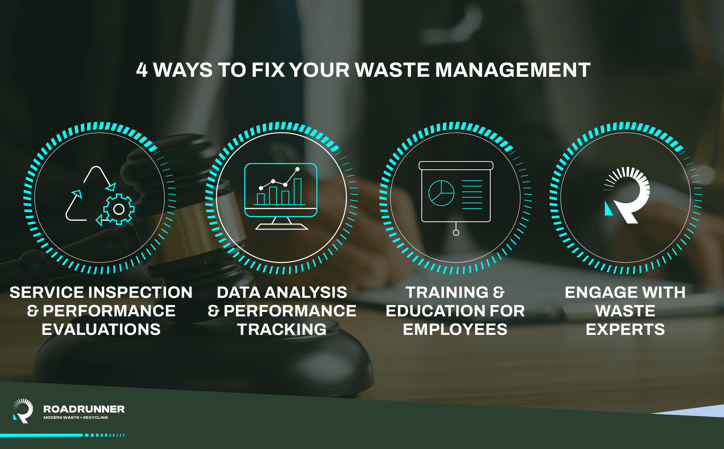
- Practical waste disposal strategies include reviewing equipment and service schedules, tracking program performance, educating employees, and working with commercial waste experts.
- RoadRunner helps businesses improve efficient commercial waste disposal through data-backed insights, technology, and managed waste and recycling support.
Efficient waste management is often judged by positive changes that aren’t always visible from the outside, like fewer missed pickups, less overflow, cleaner recycling streams, and fewer service issues pulling staff away from their work. When a waste program falls out of step with actual operations, costs can rise quickly and add up fast. Businesses with inefficient practices also tend to struggle more with environmental sustainability and regulatory compliance.
Unfortunately, inefficient waste disposal is rarely caused by one obvious problem. It builds over time and becomes harder to solve as reporting gaps widen. Slowly but surely, it becomes harder to track your service needs and implement a solution.
In this blog, we will break down the warning signs to watch for. Continue reading to learn about 4 waste disposal strategies that help businesses build a more effective, cost-conscious program.
4 Signs of Inefficient Waste Disposal
Inefficient waste disposal often shows up in smaller operational problems before anyone notices it has become a larger cost issue. Everything from rising disposal expenses to missed pickups can point to a waste program that no longer fits the business. Below are four signs that your current approach may need review.
1. Recurring Service Issues and Downtime
No matter your business, profitability is likely at its core, and this usually depends on operations running smoothly. That means your operation values the efficient use of resources, places a priority on mindful spending of budget, and requires machinery and tools to work properly to avoid downtime.
When dealing with waste and recycling, downtime can be a result of three actions (or inactions) that cost your business time and money:
- Your service provider frequently misses scheduled pickups resulting in dumpster overflows. Depending on your industry, this can mean work stoppage, regulatory compliance issues, fines, legal issues, and reputational damage. And if food and organic waste is involved, odors can quickly overtake a facility and environmental safety can become a major issue.
Total losses due to machine downtime are estimated to total US$864 billion per year across Fortune Global 500 industrial companies.
- Poor care of equipment by your waste service provider or vendors. This could result in broken-down compactors or balers that can interrupt your operations. Recurring breakdowns of equipment can result in higher operational costs because of repairs, replacements, and additional labor requirements.
- Poor operations resulting in bottlenecks. Not knowing where in your operations the most waste is produced, this could cause work stoppage due to incorrect equipment needs or service scheduling.
An optimized waste management system ensures affordability by making sure both you and your vendors are operating efficiently and reliably.
2. Poor Fit for Changing Waste Volumes
Waste disposal becomes inefficient when service schedules, container capacity, or recycling streams cannot adjust to changes in volume.
Inefficient waste management programs lack the necessary infrastructure and capacity to handle high volumes of materials, resulting in a struggle to keep up with the waste generation rate during periods of high production.
Materials can pile up in bins and at collection points, especially during seasonal fluctuations such as holidays or special events. Many haulers will charge extra fees to service bins that are overloaded or overflowing. Additionally, inefficient waste management systems often struggle to adapt service schedules to accommodate fluctuating volumes and streams.
During high production periods, waste collection might occur as frequently as needed. On the other hand, during off-peak periods, your business could be paying for unnecessary pickups for bins that are not full and processing equipment that sits idle.
It's critical for budgeting and operational efficiency that your waste management provider can be flexible enough to handle these changes rather than providing a one-size-fits-all service schedule.
3. Inaccurate Waste Data and Reporting
In an era of increasing scrutiny regarding business operations and environmental sustainability, both consumers and leaders require that the impacts of products and services be quantified. This data not only provides an insight into the effects of a business on the biosphere, but also how protected a business is from climate-related impacts.
Without accurate waste data, businesses may struggle to see where materials are going, which services are being used, and where disposal costs are increasing.
Many waste services providers rely on estimates and equations to determine equipment and service needs. These estimates also provide the basis for data collection and reporting. However, estimates don't provide a true picture of how well a waste management program is performing for a business.
Inaccurate data can result in over- and under-estimations for something like waste volumes, leading to problems with processing capabilities, collection infrastructure, and unnecessary expenses. Inaccurate reporting also negatively impacts ESG scores.
Accurate data is essential to make informed decisions with waste management regarding resource allocation, waste processing methods, and cost-saving opportunities. Work with a provider that employs data analytics and smart technology tools to ensure accuracy.
4. High Landfill Disposal Costs
Inefficient waste management programs tend to rely heavily on landfilling, leading to higher charges due to associated cost increases for transportation and equipment.
Other fees associated with landfills include:
- Environmental regulations
- Land costs
- Leachate management
- Methane emissions
The majority of these costs are passed on to the customer, often making landfilling waste overly expensive for businesses. Meanwhile, implementing recycling and composting systems along with waste reduction initiatives can mean avoiding or reducing these landfill costs.
Adopting modern waste management technologies and equipment — and implementing more affordable disposal methods — can mean increased cost savings and an efficient, optimized waste management program.
Reducing unnecessary pickups, avoiding overloaded containers, and improving diversion can also support more energy efficient waste disposal by limiting avoidable hauling, equipment use, and landfill trips.
4 Waste Disposal Strategies for a More Efficient Program
Efficient commercial waste disposal starts with understanding how much waste your business actually generates. You’ll need to understand where materials are collected and whether current services match your actual operating needs. Below are the strategies we recommend for ensuring more effective waste disposal.
1. Review Equipment, Service Schedules, and Performance
One practical solution businesses can leverage to fix inefficiencies in waste management operations is regular inspections and evaluations of equipment, services, schedules and vendors:
- Utilizing advanced monitoring systems and sensor technology can help feed data at scale across an entire company’s footprint.
- Adding AI to this process creates advantages for businesses in being able to detect abnormalities, identifying potential problems before they arise and advanced monitoring and analysis of waste streams.
- Ensuring equipment such as compactors or balers are finely tuned machines running in an optimal capacity is what businesses should be aspiring to achieve.
Anything suboptimal likely means increasing costs.
Concurrently, performance evaluations also help gauge the effectiveness of a business waste operation. Waste auditing is a prudent step for most businesses as this process uncovers inefficiencies, pain points, and cost savings opportunities. Waste metering technology feeds data in near real-time, allowing constant monitoring of equipment and waste streams. It also holds vendors and haulers accountable to service schedules.
Systematically monitoring, evaluating, and optimizing business waste management processes is a proactive approach that ultimately leads to a more efficient, fine-tuned system that fits the needs of your operations.
2. Track Waste Data and Program Performance
Data-driven insights allow businesses to see waste pattern generations, composition, disposal trends, pain points, and service issues. Systematically analyzing this information enables companies to continually improve processes for waste management and pivot quickly to meet changing demands. The data can also lay out opportunities for waste reduction and areas of increased recycling efficiency.
Using data analytics to track the performance of operational waste and recycling management helps identify peaks and troughs in waste generation. It can:
- Assess the efficacy of waste collection service schedules
- Analyze data on recycling rates
- Identify the types of waste being discarded
- Uncover cost drivers for affordability
- Ensure regulatory compliance
Data analytics plays a critical role for businesses in identifying waste management inefficiencies because of the valuable insights it provides into various aspects of operations. Employing this tool is a step toward affordability for many businesses.
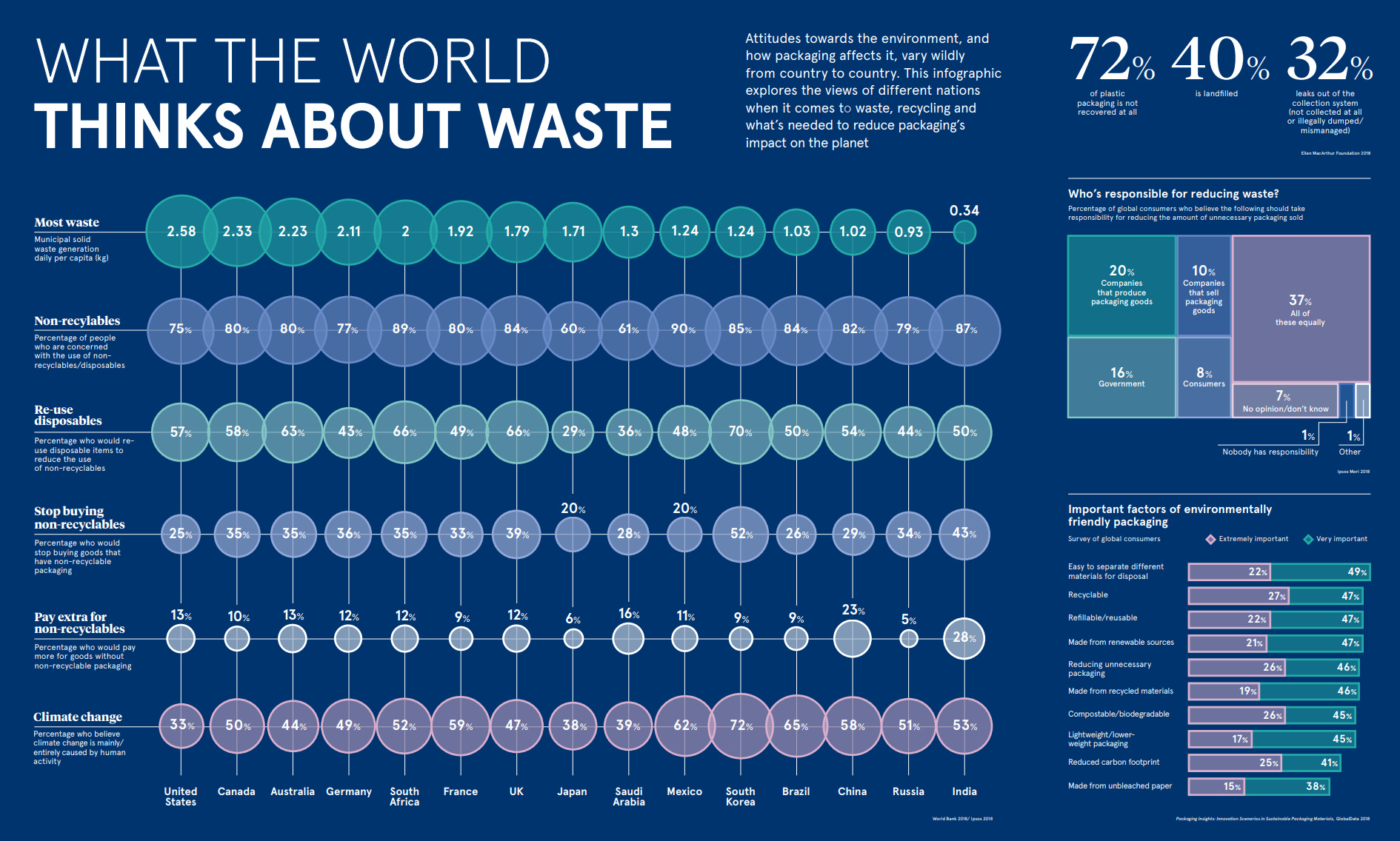 Source: Visual Capitalist
3. Educate Employees on Proper Waste Sorting
Employee education can improve waste sorting, reduce contamination, and make recycling programs easier to follow during daily operations.
Through training programs, employees can develop a deep understanding of the various waste management techniques and the consequences of improper waste disposal. This knowledge equips them with the ability to identify potential inefficiencies and take proactive measures to address them.
For example, they can learn how to read plastic recycling symbols and properly dispose of plastics at work going forward. Furthermore, by educating employees about waste reduction strategies, organizations can foster a culture of sustainability within their workforce, which has the power to significantly contribute to waste management efficiency and ultimately lead to cost savings for the organization.
By providing hands-on training on waste sorting, segregation, and recycling techniques, organizations can ensure that employees possess the practical skills required for effective waste management. This training can also encompass the proper handling of hazardous waste, ensuring compliance with safety regulations and minimizing any potential harm to the environment and human health.
Investing in comprehensive employee training and education programs is an investment in making waste management more cost-effective for businesses.
4. Work with Commercial Waste Experts
Waste experts such as RoadRunner can provide businesses with viable and effective solutions to fix waste management inefficiencies that also correspond to greater affordability.
Waste experts possess the knowledge, skills, and experience required to identify and resolve inefficiencies. By partnering with these experts, businesses can benefit from their innovative ideas to streamline waste management processes and make them more cost-effective.
Many businesses do not have the time or resources to devote to developing a deep understanding of the complexities involved in waste management, including waste reduction, recycling, reuse, and circularity. Third-party waste experts are well-versed in the latest technologies and best practices that can optimize waste management operations and minimize costs.
The World Bank estimates global waste to increase by 70% over the next 30 years – to a staggering 3.40 billion tonnes of waste generated annually.
Moreover, waste experts can aid in the large, involved process of waste auditing and waste metering. With their insights, they can propose tailored solutions that address specific challenges faced by businesses and communities, ultimately enhancing affordability.
Engaging waste experts also brings the added benefit of staying up-to-date with the ever-evolving waste management industry. They continuously monitor new regulations, advancements in waste treatment technologies, and emerging trends that can further optimize waste management processes.
Working with trusted waste management experts like RoadRunner can have a significant impact on course-correcting inefficiencies that result in gains for cost effectiveness.
Build a More Efficient Commercial Waste Disposal Program With RoadRunner
An efficient, optimized operational waste and recycling management program plays a critical role in reducing costs, achieving sustainability goals, and improving productivity for businesses. By understanding the signs pointing to inefficient waste equipment and services, and implementing practical solutions, businesses can streamline operations to reap the associated benefits.
It's crucial that businesses proactively address inefficiencies and invest in modern waste management solutions to stay competitive in today’s environmentally conscious landscape.
