It’s not surprising to hear that industrial and manufacturing businesses generate large and diverse waste streams.
Some of that waste is an unavoidable consequence of the manufacturing process, but how that waste is managed can have a major impact on finances and operations. A streamlined and strategic approach can reduce costs and compliance risks, while a less organized and optimized approach can lead to a variety of issues.
The obstacle for many businesses in the manufacturing industry is that scaling efficiency efforts is difficult or impossible without the right systems and strategies. How can your organization move past that obstacle? Consider these scalable strategies for industrial waste management.
How to Reduce Industrial Waste: Addressing Costs & Compliance
Industrial waste disposal is a complex and involved process. However, there are signs that a change, in terms of reducing waste output and increasing process efficiency, is not only possible, but already occurring.
For example, the EPA reports that TRI chemical waste production in manufacturing, which increased from 2013 through 2018, has decreased since that point. Similarly, recycling and energy recovery efforts have increased in the big picture.
In the same period, the release and treatment of this waste, both of which are less efficient options for managing waste because they don’t include a reuse component, have decreased.
A move to increased efficiency in waste management strategies is often possible and offers some significant benefits. Consider these strategies for improving industrial waste handling and reducing costs related to waste material.
Optimize Material Segregation at Scale
Manufacturing often creates diverse and high-volume waste streams, with industrial waste examples ranging from scrap metal to organics and plastics. Those streams grow as companies prosper and increase production, especially across multiple facilities.
Standardizing separation policies and workflows across all locations leads to a consistent approach across the entire organization.
This can increase diversion rates (and reduce the cost of waste disposal) as well as reduce contamination rates. It can also allow companies to reclaim and reuse, resell, or exchange waste products that are valuable to their own operations or those of other businesses.
Leverage Data and Technology for Increased Visibility in Industrial Waste Handling
A lack of data and insight into industrial waste management practices can leave manufacturers in a reactive or generally unaware position. Without the ability to understand and forecast waste volume and possible changes, businesses are left with few options for improvement in terms of compliance and reducing costs.
Improved insight into key metrics like waste volume and recycling rates can help to:
- Identify opportunities for cost savings, such as reducing unnecessary hauls.
- Verify compliance with mandated and voluntary waste management programs.
- Proving sustainability efforts and progress.
Collecting, managing, analyzing, and generating insights from waste management data to this degree can seem like a complex and costly process for manufacturers.
Working with an industrial waste handling partner that takes the initiative in data analytics and reporting can make a significant and positive difference.

Right-Size Equipment and Hauling for Industrial Waste Handling
Outdated or mismatched containers and hauling schedules increase costs without adding benefits. For larger manufacturers with many facilities, these inefficiencies can represent a major and avoidable expense.
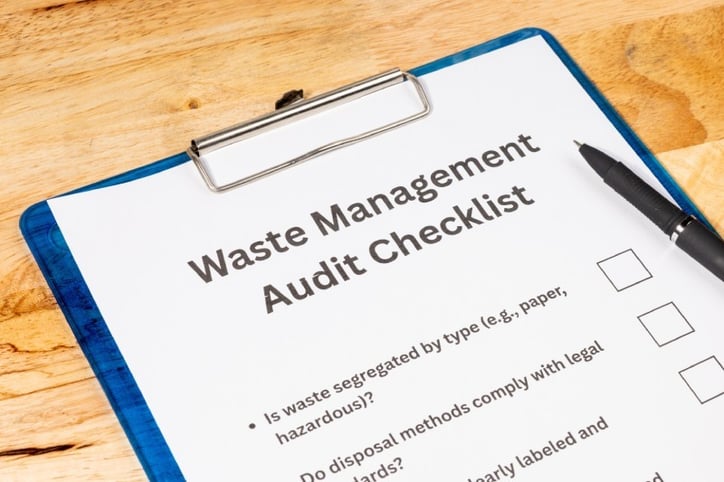
Auditing waste output on a per-facility basis can help identify costly inefficiencies. This process can help to avoid situations where a dumpster is too large or the service schedule is too frequent, and manufacturers pay for a level of service they don’t need.
Similarly, an audit can find the opposite – that a dumpster is too small or the service schedule is too infrequent. This can lead to penalties or extra fees for hauling that could be avoided with a better understanding of waste output.
This is another area where the right partner for industrial waste hauling can provide valuable assistance. A data-driven service provider can consolidate and streamline services across multiple locations, reducing the cost of waste handling and disposal through ongoing auditing and optimization.
Partnerships for a More Efficient Approach to Industrial Waste Handling
Efficient and scalable waste handling is entirely possible through strategies like improving data and insights, enhancing material segregation, and right-sizing equipment and hauling schedules.
It’s also crucial to note that manufacturers don’t need to take on these challenges alone, making major adjustments and additions to their operations in search of better cost savings and consistency in waste handling across multiple locations.
RoadRunner’s tech-enhanced, fully managed approach to waste handling gives organizations an experienced, capable, and data-driven waste department. From local vendor procurement to continually identifying optimization opportunities, our team can transform your approach to managing industrial waste at scale.
